
Pope Leo XIV and Trump Are Publicly at Odds — Here's What's Actually Being Said and Why It Matters

When the leader of the world's 1.4 billion Catholics and the President of the United States publicly clash, the ripple effects reach far beyond politics or religion alone. The ongoing dispute between Pope Leo XIV and Donald Trump over war, leadership, and moral authority raises fundamental questions about how power speaks — and who gets to define what's right.
For the first time in history, both the sitting U.S. president and the pope are Americans. That fact alone makes their very public disagreement unusual. But what makes it remarkable is the nature of the conflict: one man is threatening military strikes and calling the other weak, while the other is citing Scripture and refusing to back down.
How the Dispute Started
The tension between Trump and Pope Leo XIV — born Robert Francis Prevost — came to a head around Easter 2025. Trump used the holiday to threaten Iran with widespread bombing and the "eradication" of what he called "a whole civilization." The pope, in response, called that kind of language "truly unacceptable."
Trump did not let it go. On social media, he labeled Leo "Weak" and accused him of being influenced by the "Radical Left." He went further, suggesting that Leo's election as pope was essentially a gift tied to Trump's own standing, writing that the Church selected an American pope as "the best way to deal with President Donald J. Trump."
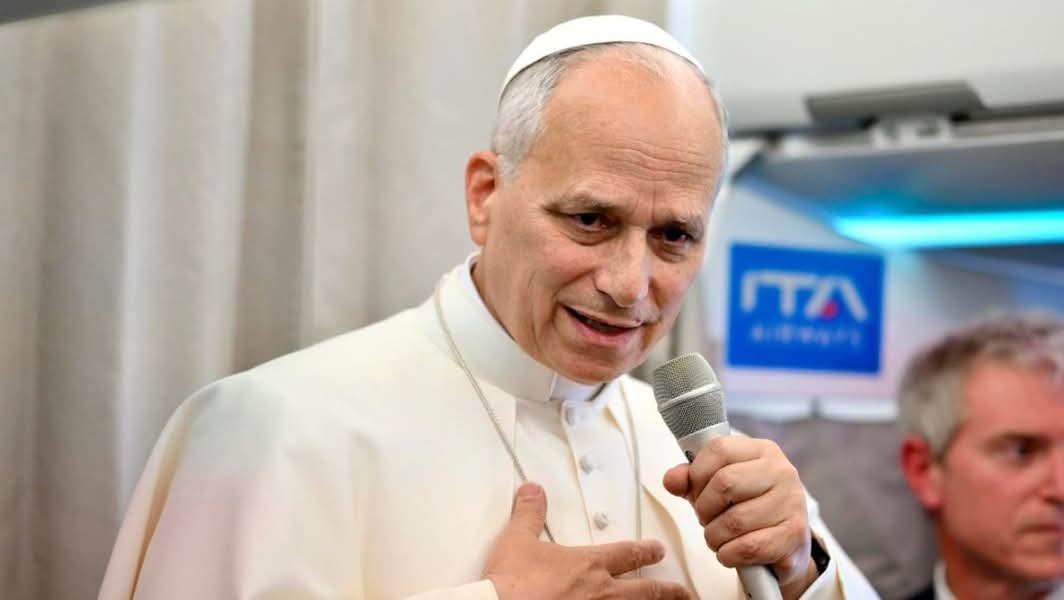
The pope's response was measured but firm. Speaking to reporters while traveling to Algeria, Leo said: "To put my message on the same plane as what the president has attempted to do here, I think is not understanding what the message of the Gospel is. And I'm sorry to hear that but I will continue on what I believe is the mission of the church in the world today."
Who Is Pope Leo XIV?
Before becoming pope on May 8, 2025, Robert Prevost spent years working as a bishop in Peru, where he developed a reputation for engaging directly with global issues. In 2022, while still serving in that role, he publicly described Russia's actions in Ukraine as an "imperialist invasion in which Russia wants to conquer territory for reasons of power given Ukraine's strategic location." Those remarks, made on a Peruvian television program called "Weekly Expression," resurfaced in Italian media after his election.
Earlier in 2025, then-Cardinal Prevost used social media to share a news analysis that challenged Vice President JD Vance's position on immigration. The headline he shared read: "JD Vance is wrong: Jesus doesn't ask us to rank our love for others." That kind of direct engagement with policy debates was notable, even among Catholic Church leaders, who regularly address public issues but rarely with such specificity.
What the Pope Has Said Since Taking Office
Leo XIV's first public words as pope, delivered from the balcony of St. Peter's Basilica, centered on peace: "Peace with you all … the first greeting of the risen Christ, the Good Shepherd who gave his life for the flock of God."
At his first Sunday blessing, he pointed to the war in Ukraine and the violence in Gaza as evidence of what he called a "third world war in pieces." Days later, speaking to journalists, he quoted the Sermon on the Mount: "Blessed are the peacemakers."
During Palm Sunday, he described Jesus as the "King of Peace" and warned that God "does not listen to the prayers of those who wage war, but rejects them, saying: 'Even though you make many prayers, I will not listen: your hands are full of blood.'"
His choice of language in public appearances has also been deliberate. Rather than speaking primarily in English, Leo has addressed the world in Italian and Spanish — signaling that he sees himself as a global leader, not a representative of any single country.
Trump's Response and the Broader Disagreement
Trump's reaction to Leo's peacemaking posture has been consistently dismissive. In one social media post, he wrote: "I don't want a Pope who criticizes the President of the United States because I'm doing exactly what I was elected, IN A LANDSLIDE, to do." He urged Leo to "focus on being a Great Pope, not a Politician."
It is worth noting that Trump's claim of a landslide victory in 2024 does not hold up to scrutiny. According to reporting from the Associated Press, that characterization is not accurate by historical standards.
When Trump first learned of Leo's election, his reaction was celebratory and personal. He posted on Truth Social: "Congratulations to Cardinal Robert Francis Prevost, who was just named Pope. It is such an honor to realize that he is the first American Pope. What excitement, and what a Great Honor for our Country. I look forward to meeting Pope Leo XIV. It will be a very meaningful moment!" He also told reporters he was "a little bit surprised and very happy" by the result.
That goodwill did not last long. Within days, Trump began framing the pope's election as something he had personally influenced — a claim that reflects a very different understanding of how the Vatican operates than the Church itself would recognize.
Meanwhile, during the same Easter weekend that Leo was calling for peace, Trump hosted conservative religious leaders at the White House. Adviser Paula White reportedly compared Trump to a persecuted savior during that gathering.
The pope, unbothered by the pressure, addressed the conflict directly while traveling to Africa: "I'm not afraid of the Trump administration, or of speaking out loudly about the message of the Gospel, which is what the Church works for."

