
Who is General Dan Caine? Top US officer facing boat strike questions

Written by: Ellie Cook at Newsweek
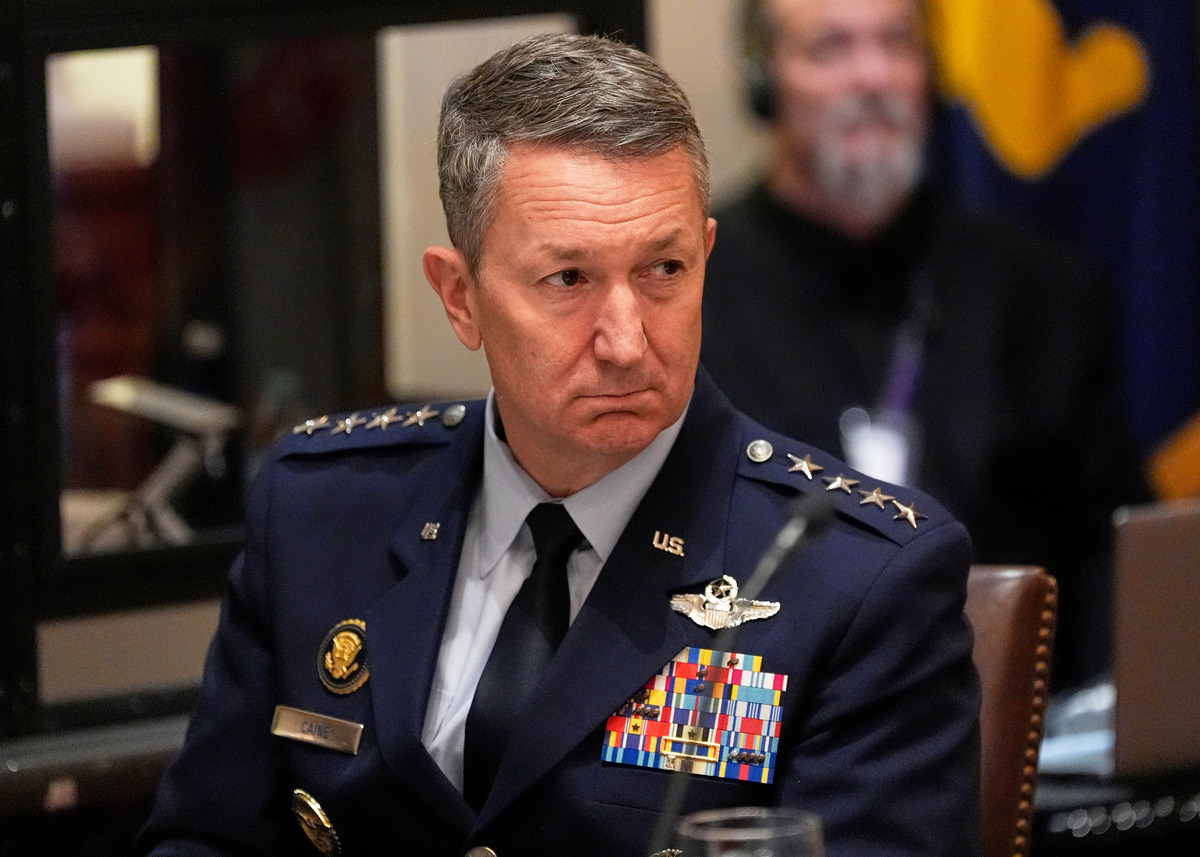
The U.S. military's top soldier, General Dan Caine, will join senior commander Admiral Frank "Mitch" Bradley in a briefing for senior lawmakers on Capitol Hill on Thursday as congressional scrutiny on U.S. strikes on alleged drug boats ramps up.
A person familiar with the situation told Newsweek that Caine had "made the decision to accompany" the admiral “to show his trust and confidence” as he faces the prominent Republicans and Democrats on the House and Senate Armed Services Committees on Thursday. His presence was not requested and is voluntary, the person said.
This person was granted anonymity because they were not authorized to speak publicly.
The U.S. is more than three months into its strike campaign on alleged drug boats in the southern Caribbean and eastern Pacific that it has framed as a crackdown on drugs flowing from South America up to the U.S. A September 2 attack was the first of the acknowledged strikes, which have killed more than 80 people, according to the administration's own numbers.
Caine was a surprise pick for the chairman of the Joint Chiefs of Staff, the most senior U.S. soldier and the top uniformed adviser to the president.
The hearing with Mississippi's Republican Senator Roger Wicker, Democratic Senator Jack Reed of Rhode Island, Alabama Republican Representative Mike Rogers and Democratic Representative Adam Smith from Washington is expected to start at 9:30 a.m. ET. It is not known how long the hearing will last.
Lawmakers have been calling for closer oversight into U.S. military strikes on suspected narcotrafficking vessels after The Washington Post first reported the first U.S. attack on September 2 had initially left two survivors before Bradley, now head of the U.S. Special Operations Command, ordered a second strike.
The Post reported that Bradley ordered the follow-up strike to comply with a verbal order allegedly given by Defense Secretary Pete Hegseth to kill all those onboard the boat. The White House confirmed the second strike and said Bradley had given the order, but denied Hegseth had issued a "kill everybody" directive. The Pentagon chief called the report "fake news."
Caine's office said on Monday he had spoken over the weekend with the two Republicans and two Democrats, and that he had told the lawmakers he had "trust and confidence" in all U.S. commanders involved in the drug- trafficking strikes, according to the readout.
Caine is a three-star general who did not meet many of the typical requirements for the Joint Chief's role and had retired from the armed forces. He rose from relative obscurity to the nomination earlier this year, prompting fears he would be closely linked politically to the administration.
But Caine painted himself as standing apart from politics during his Senate confirmation hearing in April, somewhat assuaging some of those concerns.
The U.S. military has historically stood apart from political tides, although onlookers have expressed serious concerns the Trump administration has injected the armed forces with an overtly political agenda and purged some of the most capable senior soldiers.
Born in Elmira, New York, in 1968, Caine attended the Virginia Military Institute before being commissioned in 1990. He served as an F-16 fighter pilot, and logged more than 2,800 flying hours in the jet, according to the U.S. military.
Caine previously served as the CIA's associate director for military affairs and is described by the military as working as a "serial entrepreneur and investor" between 2009 and 2016.
He holds a Master of Arts specializing in air warfare from the American Military University.
Former military lawyers and officials, as well as international observers, have raised concerns the strikes violate domestic and international law and could put U.S. soldiers at risk. The Post reported in late November that a classified Justice Department memo penned in the summer indicated U.S. personnel involved in the strikes would not be prosecuted down the line.
Shipwrecked people have specific legal protections and there are concerns the survivors of the initial strike may have been off-limits to attacks. The Pentagon's own manual bars attacks on shipwrecked people, who are to be treated as hors de combat—a French term meaning out of combat owing to injury. It is "strictly prohibited" to attack those shipwrecked with protected status, the manual says.
In remarks on Tuesday, Hegseth said he was made aware of the need for a second strike "hours" later, distancing himself from the mission that has called into question whether a war crime was committed. He had previously said he watched the attack "live."
The Wall Street Journal reported Bradley will tell the lawmakers the two survivors of the initial strike were killed after the U.S. concluded the individuals were trying to continue a drug run, which would make them legitimate targets for a follow-up attack. The WSJ cited two anonymous defense officials.
The strikes have come alongside a vast U.S. military build-up close to Venezuela, further bolstered by the arrival of the U.S.' largest aircraft carrier and other warships. The ballooning U.S. presence off the country's shores has been increasingly seen as a way to pressurize, and possibly to topple, the South American nation's authoritarian socialist leader, Nicolás Maduro.
The Pentagon has separately launched an investigation under the Uniform Code of Military Justice (UCMJ) into Senator Mark Kelly, a retired U.S. Navy captain, who appeared alongside five other Democrats in a video last month, urging U.S. service members to not follow illegal orders.
The UCMJ is federal criminal law that applies to service members around the world. The Pentagon said it could recall Kelly to active duty for a court-martial under the code.
President Donald Trump accused the lawmakers of "seditious behavior" and Hegseth called the video "despicable, reckless, and false."
Under military law, service members are obligated to obey lawful orders, but to disobey unlawful orders. The UCMJ does not protect soldiers who carry out unlawful orders simply on the basis that they were following directives from above. The Nuremburg Trials in the wake of World War II cemented that this cannot be used as an automatic defense.